
Agentic AI Red Teaming that attacks like an adversary, continuously.
AI red teaming, done by agents. FireCompass agents discover your real attack surface, decide the next move from what they just found, chain weaknesses into multi-stage attack paths and prove every finding with a proof of concept. Governed, production-safe, under 2 percent false positives.
Free AI Pen Test →Talk to a Security ExpertWhat is AI red teaming?
AI red teaming has two meanings, and most pages only cover one. The first is red teaming AI systems: testing models, LLM applications and agents for prompt injection, jailbreaks and data leakage. The second is AI that does the red teaming: autonomous agents that attack your applications, APIs and infrastructure the way a human adversary would. The market now calls the second agentic red teaming.
Red teaming AI systems
Testing a model or an LLM application for unsafe behaviour: prompt injection, jailbreaks, training data extraction, harmful output. Owned by AI safety teams and model vendors. FireCompass does not evaluate model alignment. It does test the web applications and APIs your AI features ship inside, including the OWASP Top 10 and business logic flaws around them.
Agentic web application pentesting →AI agents that red team you
Agentic red teaming is security testing performed by AI agents that plan and execute attacks against your systems, choosing each next step from what they just found. It covers discovery, exploitation, lateral movement and evidence, at the speed and cost of software rather than a consulting engagement. This is what FireCompass builds.
How it works →Trusted by Avid Technology
Maker of tools used across Hollywood, broadcast and music
“The platform helps identify potential attack paths and highlight those that are exploitable.”
“FireCompass AI Agents have been valuable in supporting our continuous security assessment program. The platform helps identify potential attack paths and highlight those that are exploitable. It significantly reduces the time required for attack-surface discovery, initial testing, and evidence collection compared with a manual penetration-testing approach. This gives our Application Security team more time to focus on fixing and retesting. The FireCompass team has also been collaborative and responsive throughout the process.”

Curious what attack paths exist in your apps? Book a 20-minute walkthrough with our team
Annual red teaming was built for attackers who worked office hours.
AI gives attackers reconnaissance, exploit generation and credential testing at machine speed. Defenders still book one engagement a year. The gap opens across scope, depth and speed at once.
Most of the surface is never tested
- Staging hosts, forgotten subdomains and undocumented APIs sit outside scope
- About 20 percent of breaches enter through a peripheral asset
Findings are isolated and unproven
- Scanner false positives run 40 to 70 percent
- 22 percent of breaches start with credential abuse that no scanner chains
Once-a-year testing cannot keep up
- CVEs are exploited in about 3 days
- Manual engagements take 2+ weeks to start
Four moves, each decided by the agent, each closing a gap.
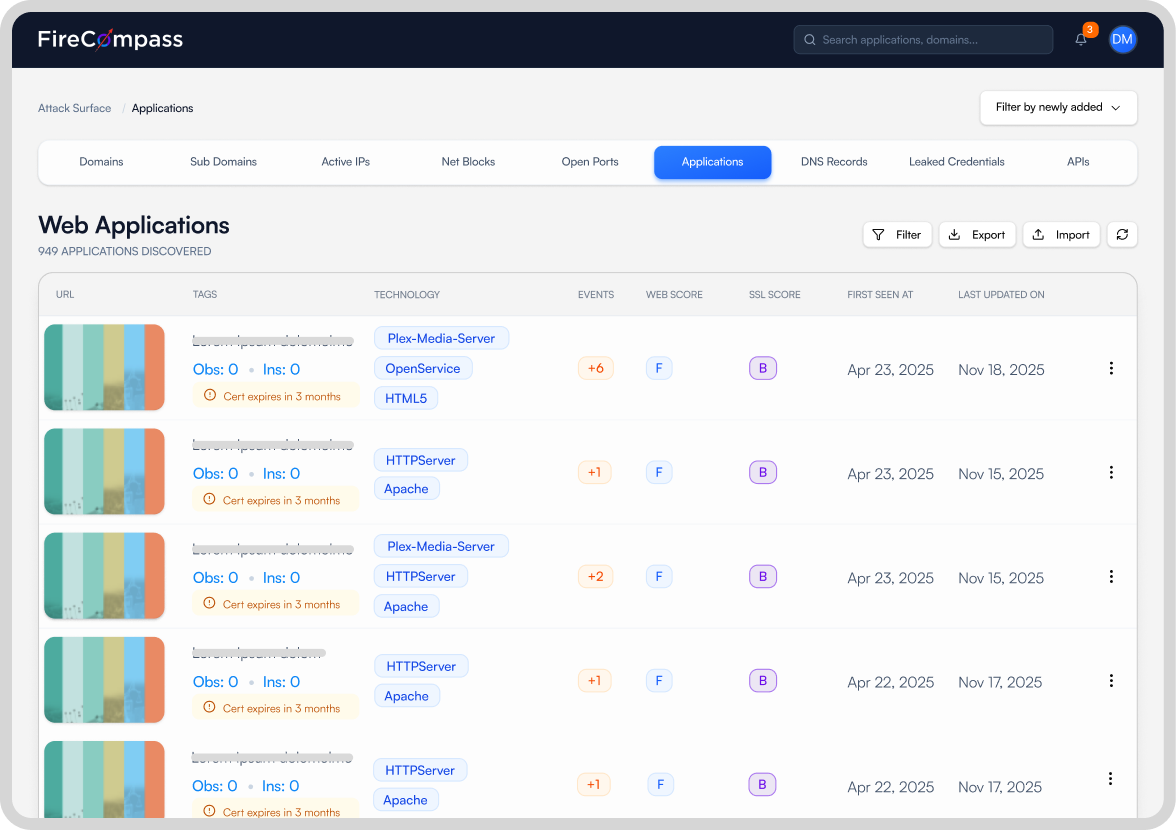
Map the surface attackers actually see
Agents build the attack surface before attacking it: domains, subdomains, APIs, cloud assets and the staging host nobody listed. Point-and-shoot tools attack a URL list you hand them.
- Shadow apps and forgotten subdomains
- Leaked credentials on the deep and dark web
- API endpoints pulled from JS files
Prove what is exploitable
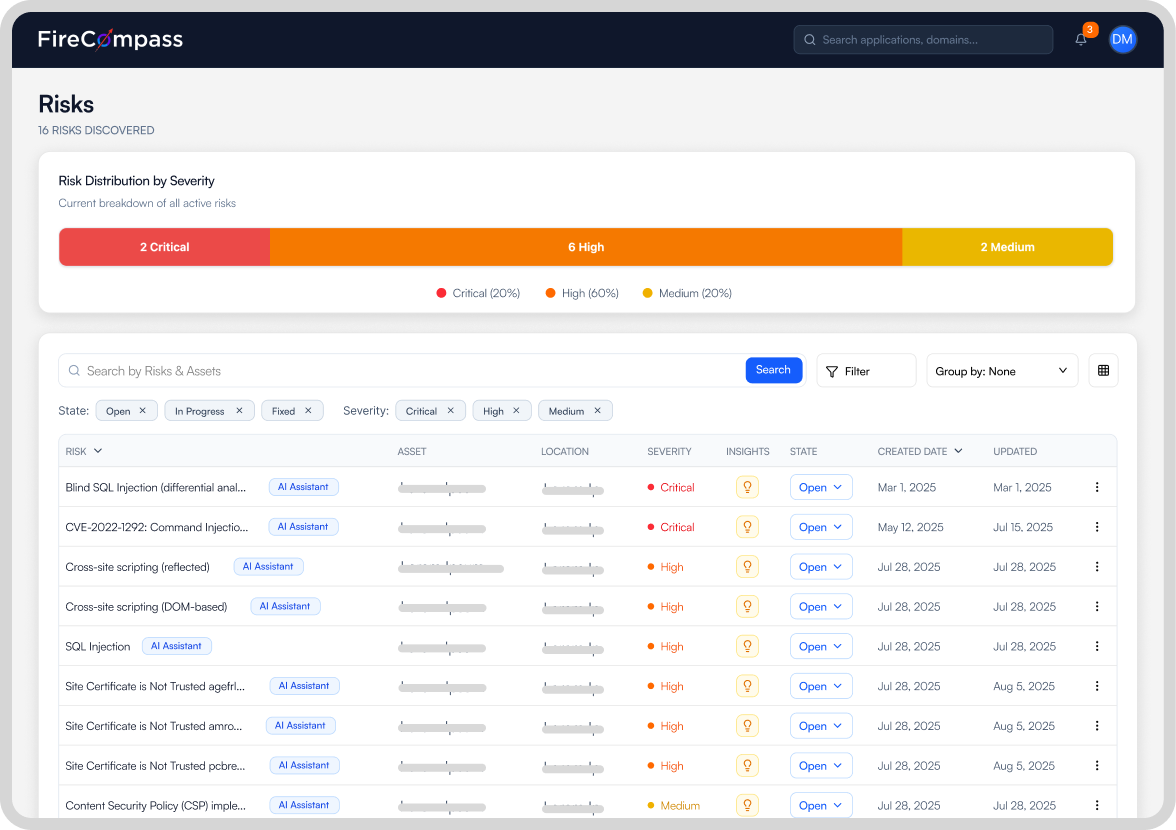
Every finding ships with the request, the response and the data reached. No proof of concept, no finding. That discipline is why false positives stay under 2 percent.
- OWASP Top 10 and business logic flaws
- Authenticated and unauthenticated paths
- Credential abuse and authorization bypass
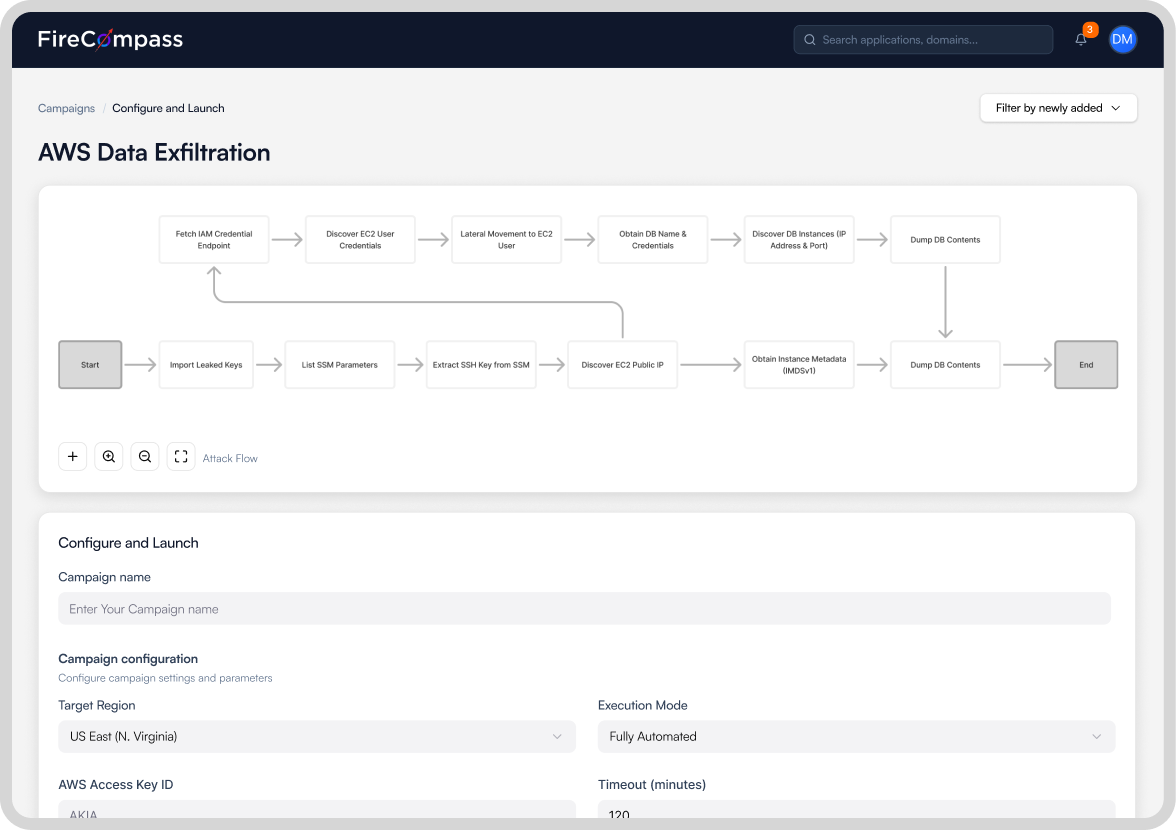
Chain findings into real attack paths
Web application flaw to credential to lateral movement to internal target. The agent decides the next step from the last result, the way an adversary would, and maps each step to MITRE ATT&CK.
- Multi-stage paths across web, API and infrastructure
- Privilege escalation and lateral movement
- Blast radius shown, not guessed
Run on your cadence, not a calendar
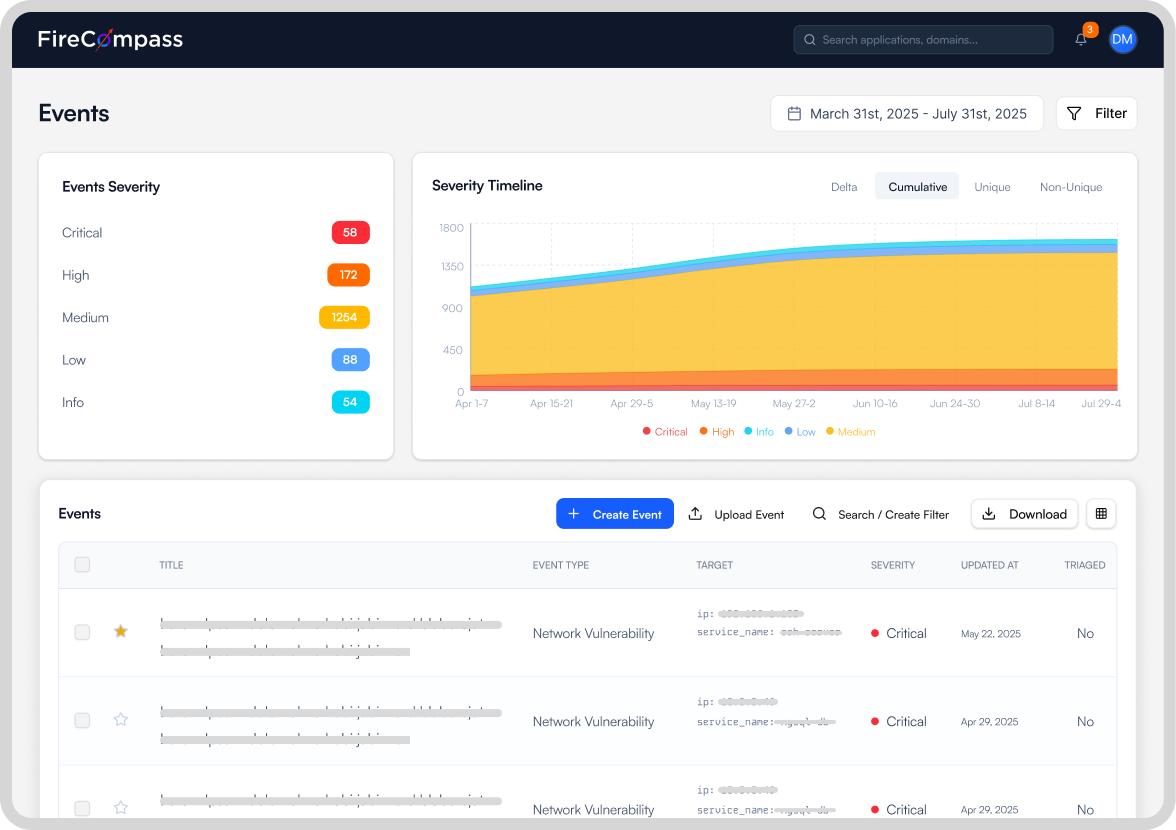
Weekly, on every release, or when a new CVE lands. Lead time is about one day instead of two or more weeks, so the test happens inside the exploit window, not after it. For change-triggered testing across the whole program, see Continuous Offensive Security Testing.
- Change-triggered and scheduled runs
- Day-1 validation for new CVEs
- No agents to install, no manual steering
Run AI red teaming against your own attack surface.
Start a free AI pen test. Watch the agents discover, exploit and chain in minutes.
- Shadow apps and subdomains found
- Exploits validated with PoC
- Attack paths mapped
Exploit-validated findings, benchmarked in the open.
$5,000 to under $1,000 per app. 2 weeks to 1 day.
Before: manual consulting
- About $5,000 per app, two consultant-days
- 2+ weeks lead time per engagement
- 200 of 2,000+ apps covered, roughly 10 percent
- Isolated findings, no attack chains
After: FireCompass agents
- Under $1,000 per app, about 11x lower
- 1 day lead time, continuous cadence
- 2,000+ apps, about 99 percent of the surface
- Chained attack paths, under 2 percent false positives
Most tools solve one gap and ignore the other two.
| Capability | Continuous DAST | Human-led PTaaS | Breach & attack simulation | Point-and-shoot AI | FireCompass |
|---|---|---|---|---|---|
| Decides next step from findings | No | Yes | No, scripted | Partly | Yes, agentic |
| Full attack-surface scope | Known URLs only | Scoped | Internal | URL list | Discovered surface |
| Multi-stage attack chains | No | Within scope | Pre-built | Single app | Web to infra |
| Exploit-validated PoC | No | Usually | No | Sometimes | Every finding |
| False positive rate | 40 to 70% | Low | Low | Variable | Under 2% |
| Lead time | Minutes | 2+ weeks | Days | Hours | About 1 day |
| Cost per app | Low | $2,400 to $10,000 | Platform fee | Not published | $450 to $2,500 |
Continuous Automated Red Teaming (CART), the category FireCompass named in 2021, automated reconnaissance and attack execution on a continuous cadence. Agentic red teaming adds autonomous decision-making on top of it. See Continuous Automated Red Teaming and our top 25 red teaming tools.
Autonomous only works if it is safe to run in production.
An attacker inside your environment, even your own, needs rules. We built the controls before we built the demo, because the reliability concerns raised about unsupervised adversarial testing are correct.
- Scope enforcementAgents act only on authorized assets; out-of-scope hosts are discovered, never touched.
- Production-safe exploitationImpact is demonstrated, not caused. Rate limits and safe payloads by default.
- Forensic audit trailEvery request and decision logged and replayable for your auditor.
- Human approval gatesHigh-impact actions wait for a human, if you want them to.
- Kill switchesStop any run, any agent, instantly.
Benchmarked in the open. Recognized across the industry.
100% on XBEN, Acuart and DVWA
104/104, 12/12 and every DVWA level, PoC-validated. Agents beat top human researchers 60 to 70 percent of the time in internal evaluation.
30+ analyst reports
Recognized across leading industry analyst research. GigaOm Radar Leader, Automated Red Teaming (2023).
Bruce Schneier
Security technologist and author, advisor to FireCompass.
AI red teaming, answered.
What is AI red teaming?
AI red teaming has two meanings. The first is red teaming AI systems: testing models, LLM applications and AI agents for prompt injection, jailbreaks, data leakage and unsafe behaviour. The second is AI that does the red teaming: autonomous agents that attack your applications, APIs and infrastructure the way a human adversary would. FireCompass does the second, and tests the web applications and APIs your AI features ship inside.
What is agentic AI red teaming?
Agentic AI red teaming is security testing performed by AI agents that plan and execute attacks against your environment, choosing each next step from what they just found. It differs from automated scanning, which runs predefined checks, and from red teaming AI models, which tests the model itself. FireCompass agents hold false positives under 2 percent by attaching a proof of concept to every finding.
What is automated red teaming for AI?
Automated red teaming runs a predefined library of attacks on a schedule. Agentic red teaming adds decision-making: the agent reads the result of each step and picks the next one, chains findings into multi-stage attack paths and validates each with a proof of concept. Continuous Automated Red Teaming (CART), the category FireCompass named in 2021, is the predecessor of agentic red teaming.
Which AI is best for red teaming?
Judge an AI red teaming system on published benchmarks and false positive rate, not on the model behind it. FireCompass agents solved XBEN 104/104 and Acuart 12/12 with PoC validation, cleared DVWA at every level, and beat top human researchers 60 to 70 percent of the time in internal evaluation, with false positives under 2 percent.
How is AI red teaming different from a penetration test?
A penetration test is a scoped, human-led engagement that typically starts after two or more weeks of lead time and runs once a year on about 20 percent of the attack surface. Agentic AI red teaming runs continuously, starts in about a day, and chains findings across the whole discovered surface.
Is AI red teaming legal and safe to run against production?
It is legal when it is authorized and safe when it is governed. FireCompass enforces written scope, scoped authorization, rate limits, safe exploitation that proves impact without causing damage, human approval gates for high-impact actions and a full audit log of every action.
What does AI red teaming cost compared with manual red teaming?
Agentic testing runs $450 to $2,500 per application versus $2,400 to $10,000 for manual testing. One Fortune 500 program cut cost per application from about $5,000 to under $1,000, about 11x cheaper, while scaling from 200 to more than 2,000 applications.
For security professionals
Continuous Automated Red Teaming (CART)
The category FireCompass named in 2021: continuous reconnaissance and attack execution, the predecessor of agentic red teaming.
See the use case →Agentic Web Application Pentesting
Web and API depth: business logic, auth flaws and chained exploitation with PoC.
See the use case →Top 25 red teaming tools
The open-source and commercial tools red teams actually run, and where agents fit.
Read the guide →Start your free AI pen test today
Free attack surface scan. No agents to install. Results in minutes.
Free AI Pen Test →- Free attack surface scan
- No agents to install
- Results in minutes
- On-demand pen testing