
AI Web Application Penetration Testing
Autonomous AI agents discover your real attack surface, exploit it with proof, and chain findings into full attack paths across web apps, APIs, and infrastructure. Continuously, not once a year.
What is AI web application penetration testing?
AI web application penetration testing uses autonomous AI agents to find, safely exploit, and validate security flaws in web applications and their APIs. Unlike a scanner, it proves exploitability with evidence, chains weaknesses into multi-stage attack paths, and runs continuously instead of once a year.
FireCompass has been named a Sample Vendor for the Adversarial Exposure Validation use case in the Gartner® Hype Cycle™ for Security Operations, 2026, our fifth consecutive edition in this Hype Cycle.
Gartner, “Hype Cycle for Security Operations, 2026,” Darren Livingstone, Jonathan Nunez, 5 June 2026, ID G00846365.
Gartner does not endorse any vendor, product or service depicted in its research publications and does not advise technology users to select only those vendors with the highest ratings or other designation. Gartner research publications consist of the opinions of Gartner’s research organization and should not be construed as statements of fact. Gartner disclaims all warranties, expressed or implied, with respect to this research, including any warranties of merchantability or fitness for a particular purpose.
GARTNER and HYPE CYCLE are trademarks of Gartner, Inc. and/or its affiliates and are used herein with permission. All rights reserved.
Trusted by Avid Technology
Maker of tools used across Hollywood, broadcast and music
“The platform helps identify potential attack paths and highlight those that are exploitable.”
“FireCompass AI Agents have been valuable in supporting our continuous security assessment program. The platform helps identify potential attack paths and highlight those that are exploitable. It significantly reduces the time required for attack-surface discovery, initial testing, and evidence collection compared with a manual penetration-testing approach. This gives our Application Security team more time to focus on fixing and retesting. The FireCompass team has also been collaborative and responsive throughout the process.”

Curious what attack paths exist in your apps? Book a 20-minute walkthrough with our team
Annual web app pentesting cannot keep up with attackers
Attackers work on a days timeline. Most pentesting programs run on a calendar. The gap opens across scope, depth, and speed at once, and attackers exploit all three.
Most of the surface is never tested
- Crown-jewel apps get attention; peripheral assets do not
- Shadow apps, forgotten subdomains, and API endpoints in JS files stay dark
- Attackers probe 100% of the surface
Findings are noisy and isolated
- Scanner false positive rates reach 70% or higher
- 22% of breaches start with credential abuse, routinely under-tested
- Business logic flaws are scanner-invisible
Once-a-year testing cannot keep up
- Many organizations still test once per year
- Attackers exploit new CVEs in about 3 days
- Teams ship weekly, so the gap widens every release
One agentic platform. Four jobs, done continuously.
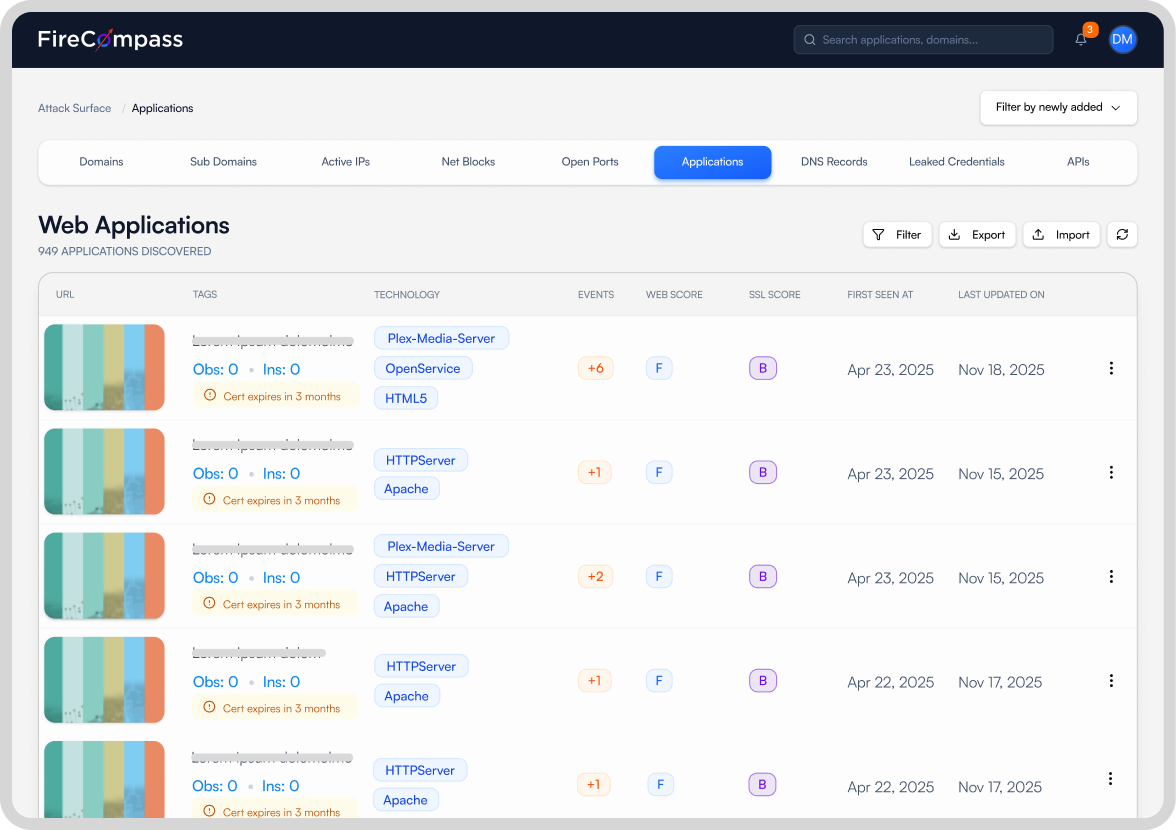
Map the real attack surface
The agent finds what you do not have in your inventory, the assets attackers reach first.
- Shadow apps and forgotten subdomains
- Leaked credentials on the deep and dark web
- API endpoints pulled from JS files and traffic
- Peripheral assets prioritized by exposure
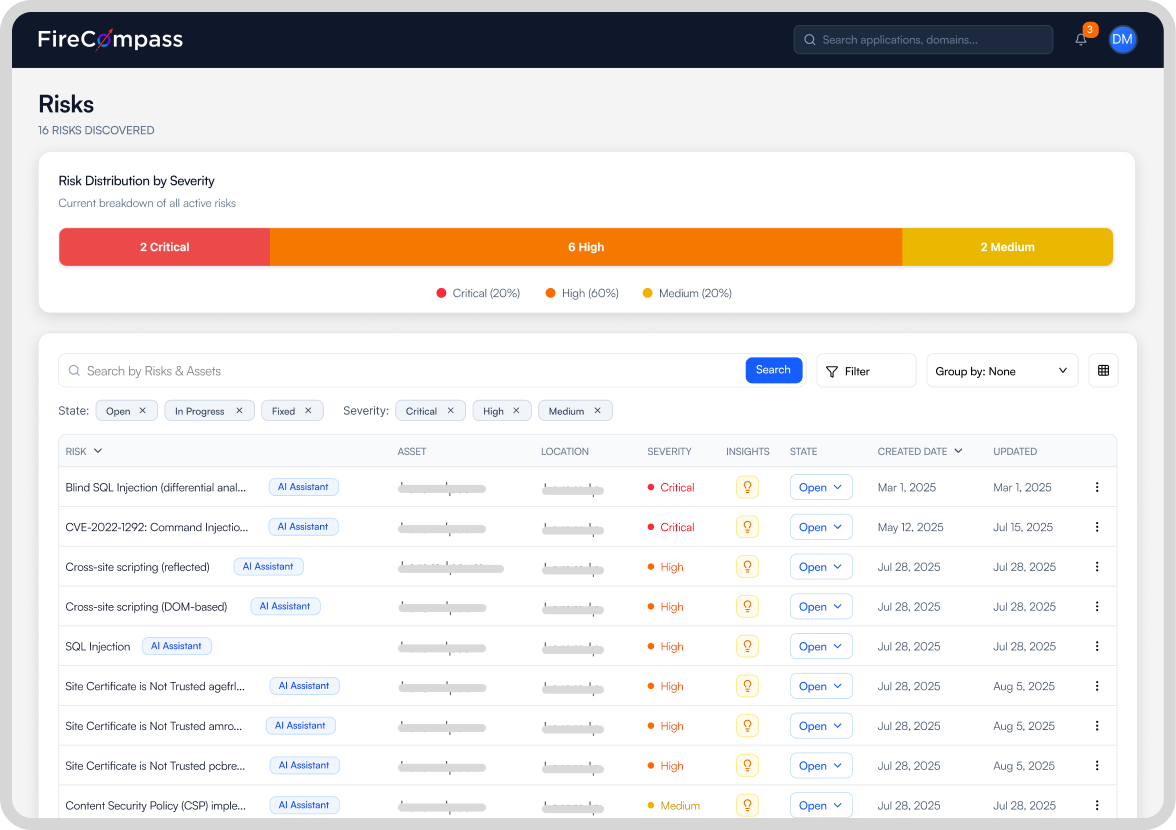
Prove what is exploitable
Every finding comes with a proof-of-exploit, not a maybe. That is how false positives stay under 2%.
- OWASP Top 10: 2025 aligned coverage
- Authenticated and unauthenticated paths
- Credential abuse and authorization testing
- Business logic flaws scanners cannot see
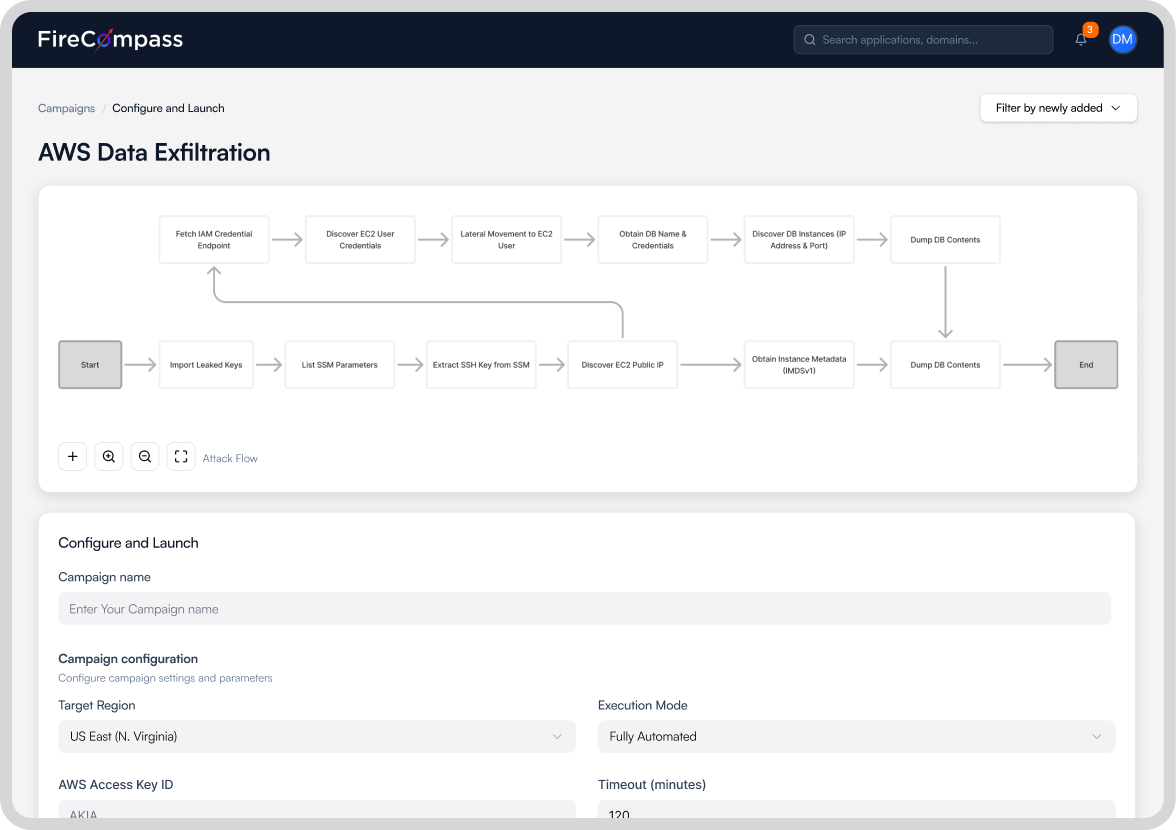
Show the true blast radius
Isolated findings hide risk. The agent links them the way an attacker would, across apps and into the network.
- Credential reuse across environments
- App-to-app and app-to-network lateral movement
- Privilege escalation path discovery
- MITRE ATT&CK kill chain automation
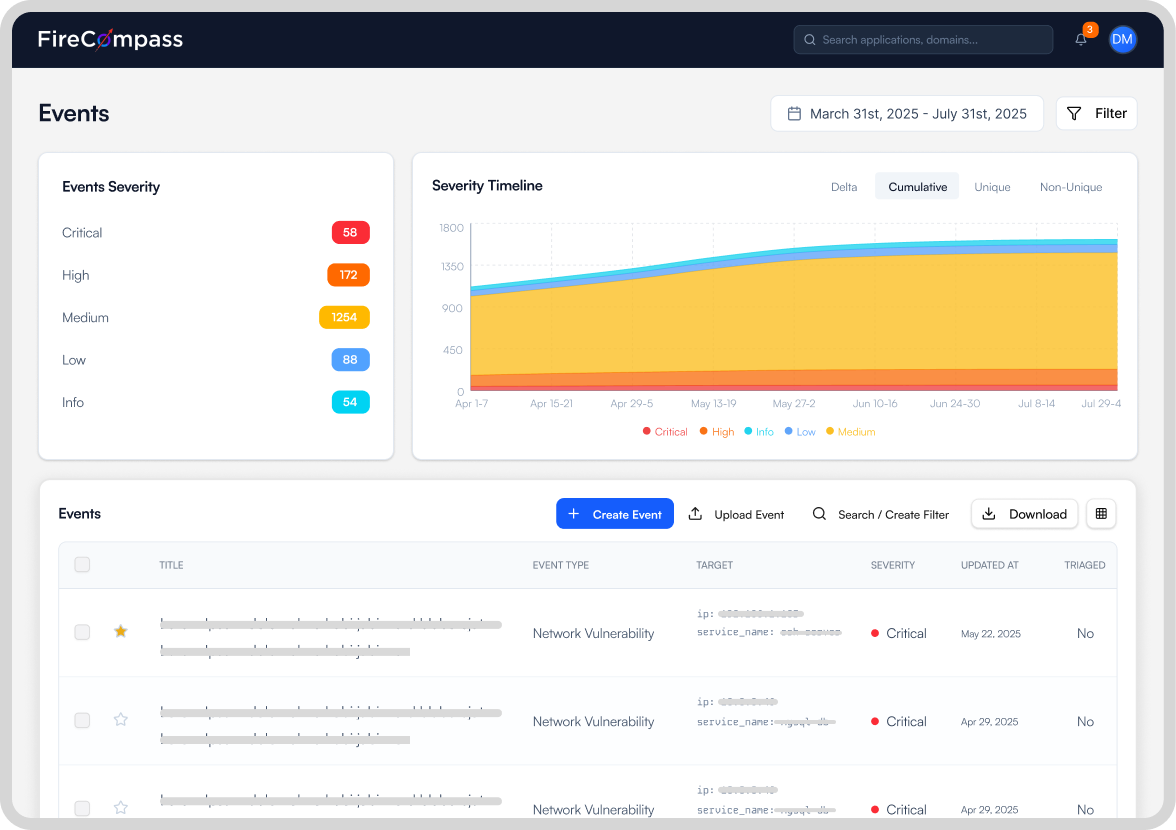
Run Weekly, on-demand, or CI/CD-aligned
A change ships, a test fires. No scheduling, no waiting two weeks for a vendor slot.
- Day-1 validation for new CVEs
- One-click revalidation to confirm fixes
- Agentless, no install required
See it on your own surface
Run a free AI pen test and watch the agent discover, exploit, and chain in minutes.
From an exposed .git directory to full database compromise
No human steering. No predefined playbook. The AI agent chained four findings autonomously into a full compromise a scanner would log as a single medium-severity issue.
Credentials in .git repo
The agent reconstructed an exposed .git directory and extracted database credentials from config files.
Direct DB access blocked
The database port was not externally exposed. A traditional scanner stops here.
Credential reuse to SSH root
The agent reused the same credentials against SSH and gained root access to the server.
Internal pivot to DB dump
It found private keys, pivoted to the internal network, reached the database, and exfiltrated data.
More real-world attack chains discovered by AI
Agentic AI platform for automated pen testing and continuous red teaming
FireCompass closes the scope, depth, and speed gaps with a single AI-driven platform across web apps, APIs, and infrastructure.
Discover
- Shadow apps and forgotten subdomains
- Leaked credentials on the dark web
- API endpoints from JS files and docs
- Peripheral assets attackers target first
Pentest
- OWASP Top 10 plus business logic testing
- Authenticated and unauthenticated paths
- Credential abuse and session attacks
- Proof-of-exploit for every finding
Chain & red team
- Credential reuse across services
- App-to-app and app-to-network pivots
- MITRE ATT&CK kill chain automation
- End-to-end red team scenarios
Continuously
- Weekly or on-demand pen testing
- Matches CI/CD release cadence
- Day-1 CVE validation
- Agentless, no install required
100% across every penetration testing benchmark
Fully autonomous, with no manual steering and no human hints, verified against industry-standard pentesting environments.
FireCompass vs. other testing approaches
| Capability | FireCompass | Point-and-shoot AI | Leading DAST | Manual PT |
|---|---|---|---|---|
| False positive rate | Under 2% | Variable | 40 to 70% | Low but variable |
| Business logic testing | AI-driven | Limited | Not supported | Manual only |
| Attack chain discovery | Autonomous | Isolated findings | Single findings | Manual chaining |
| Asset lateral movement | App-to-app and infra | Single target | Out of scope | Limited by scope |
| Red team scenarios | MITRE-aligned | Not supported | Not supported | Expert-dependent |
| Cost per app | Under $1,000 | Per-test pricing | $1,460 to $2,900 | $2,400 to $10,000 |
DAST: tool usage plus 2 to 4 days of analyst time. Manual PT: 2 to 4 days of consultant testing.
$5,000 to under $1,000 per app. 2 weeks to 1 day.
Continuous AI-driven testing replaced a consulting firm's manual program across 2,000+ web applications.
Before: manual consulting
- About $5,000 per app per test, two consultant-days
- 2+ weeks lead time to schedule and complete
- 200 of 2,000+ apps tested annually
- Isolated findings, missed attack chains
- 70% false positive rate from DAST
After: FireCompass
- Under $1,000 per app, an 11x cost reduction
- On-demand testing, zero lead time
- Full coverage across 2,000+ apps continuously
- Chained attack paths consultants scoped out
- Under 2% false positive rate
Start with web app pen testing. Expand to full red teaming and CTEM.
One platform covering PTaaS, automated red teaming, attack surface management, and continuous threat exposure management.
Web & API automated pen testing
Authenticated and unauthenticated testing, business logic, and proof-of-exploit.
Infrastructure pen testing
Networks, servers, and cloud, continuously validated.
Continuous Automated Red Teaming
MITRE ATT&CK-aligned attack trees, lateral movement, and privilege escalation.
PTaaS, pen testing as a service
Expert-in-the-loop for business logic and compliance acceptance.
CTEM and attack surface management
Continuous exposure monitoring and risk prioritization.
SaaS or internal appliance
SaaS in minutes for external testing. Internal appliance in under one hour.
Trusted by Fortune 500. Recognized by Gartner, Forrester, and more.
30+ analyst reports
- Gartner 30+ reports, 5 technology maturity cycles, pen testing and CTEM
- Forrester Notable vendor, automated security testing
- IDC Innovator, cybersecurity
- GigaOm Radar Leader, Automated Red Teaming (2023)
- RSAC 365 Innovation Showcase
Fortune 500 customers
- Top 3 global telecom companies
- Top 10 IT companies
- Top 10 manufacturing firms
- Mid-sized banks and financial services
- Mid-sized automobile companies
Global presence
AI web application penetration testing, answered
What is web application penetration testing?
Is FireCompass recognized by Gartner for AI penetration testing?
GARTNER and HYPE CYCLE are trademarks of Gartner, Inc. and/or its affiliates and are used herein with permission. All rights reserved.
How is AI web application pentesting different from a traditional pen test?
Is FireCompass a scanner or an actual pentesting platform?
Does FireCompass only find OWASP Top 10 issues?
Can FireCompass test authenticated web applications?
How does FireCompass keep false positives under 2%?
Can FireCompass test APIs along with web applications?
Is there a free web application penetration test?
Go deeper
Start your free web application pen test today
Free attack surface scan. No agents to install. Results in minutes.