
Adversarial Exposure Validation (AEV) that proves exploitability, not theory
Autonomous AI agents discover your surface, run real attacks safely, and validate every exposure with a working proof of concept. It executes the attack. It does not simulate it.
What is Adversarial Exposure Validation?
Adversarial Exposure Validation (AEV) is technology that delivers continuous, automated evidence of whether an attack is actually feasible in your environment. It runs real attack techniques against live assets and proves which exposures an attacker could exploit, each with a working proof of concept. AEV does not score risk or simulate a technique. It executes the attack and shows the result.
Trusted by Avid Technology
Maker of tools used across Hollywood, broadcast and music
“The platform helps identify potential attack paths and highlight those that are exploitable.”
“FireCompass AI Agents have been valuable in supporting our continuous security assessment program. The platform helps identify potential attack paths and highlight those that are exploitable. It significantly reduces the time required for attack-surface discovery, initial testing, and evidence collection compared with a manual penetration-testing approach. This gives our Application Security team more time to focus on fixing and retesting. The FireCompass team has also been collaborative and responsive throughout the process.”

Curious what attack paths exist in your apps? Book a 20-minute walkthrough with our team
Annual pentesting was built for software that shipped once a quarter.
That world is gone. Teams deploy weekly or daily, and attackers now move at machine speed. Three structural gaps open the moment testing runs on a calendar.
Tested vs attacked
Most programs test crown-jewel apps and leave shadow apps, forgotten subdomains, and API endpoints untouched. Attackers probe 100% of the surface.
Scanner false positives
Scanners flag issues in isolation. Real attackers chain them. 22% of breaches start with credential abuse, and 20% begin through a peripheral asset.
vs a 3-day exploit window
Many teams still test once a year. Attackers exploit new CVEs in about 3 days. The gap widens with every release you ship.
Four capabilities, each tied to a trigger.
A change happens, a test fires. No scheduling, no human in the critical path. Validation runs across web apps, APIs, and infrastructure.
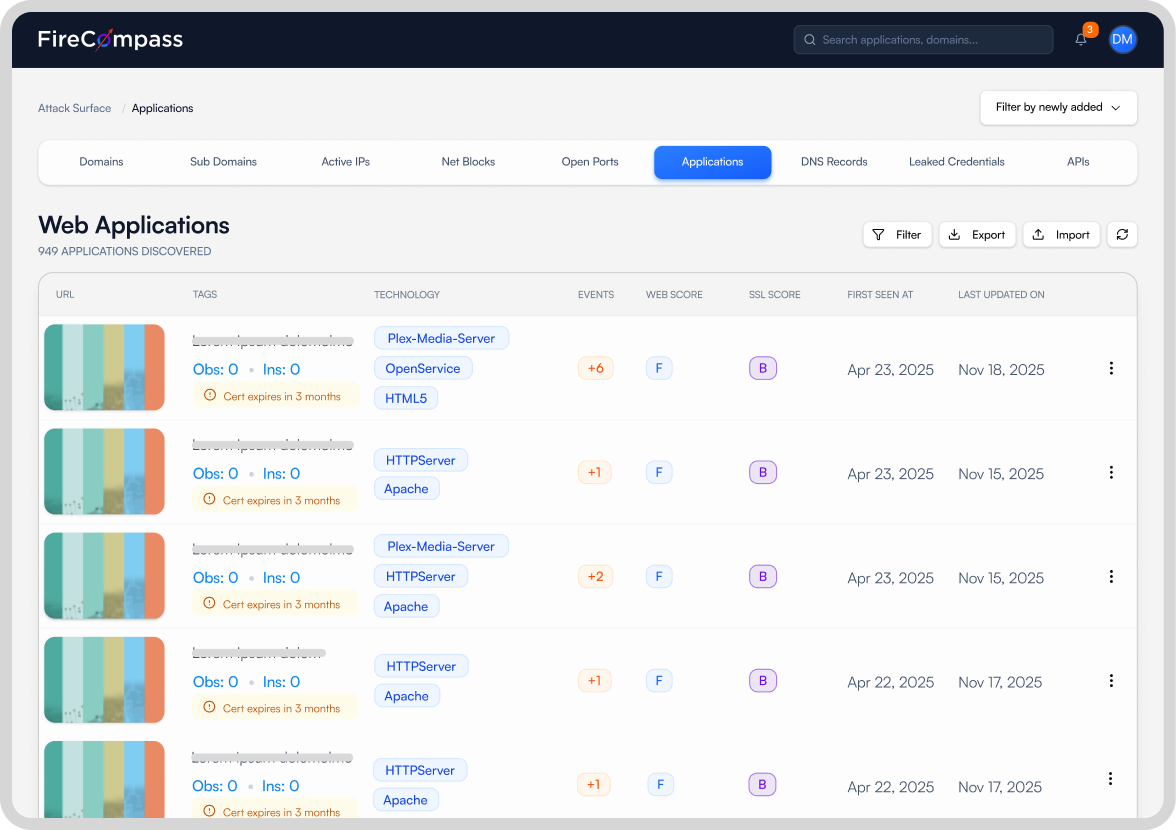
Discover the surface attackers actually see
Build your real attack surface from your name alone, so testing covers what attackers can actually reach.
- Shadow apps and forgotten subdomains surfaced from your name alone
- Leaked credentials on the deep and dark web
- API endpoints pulled from JS files and docs
- Visibility scales from about 20% to over 99% of the surface
Pentest with proof, not noise
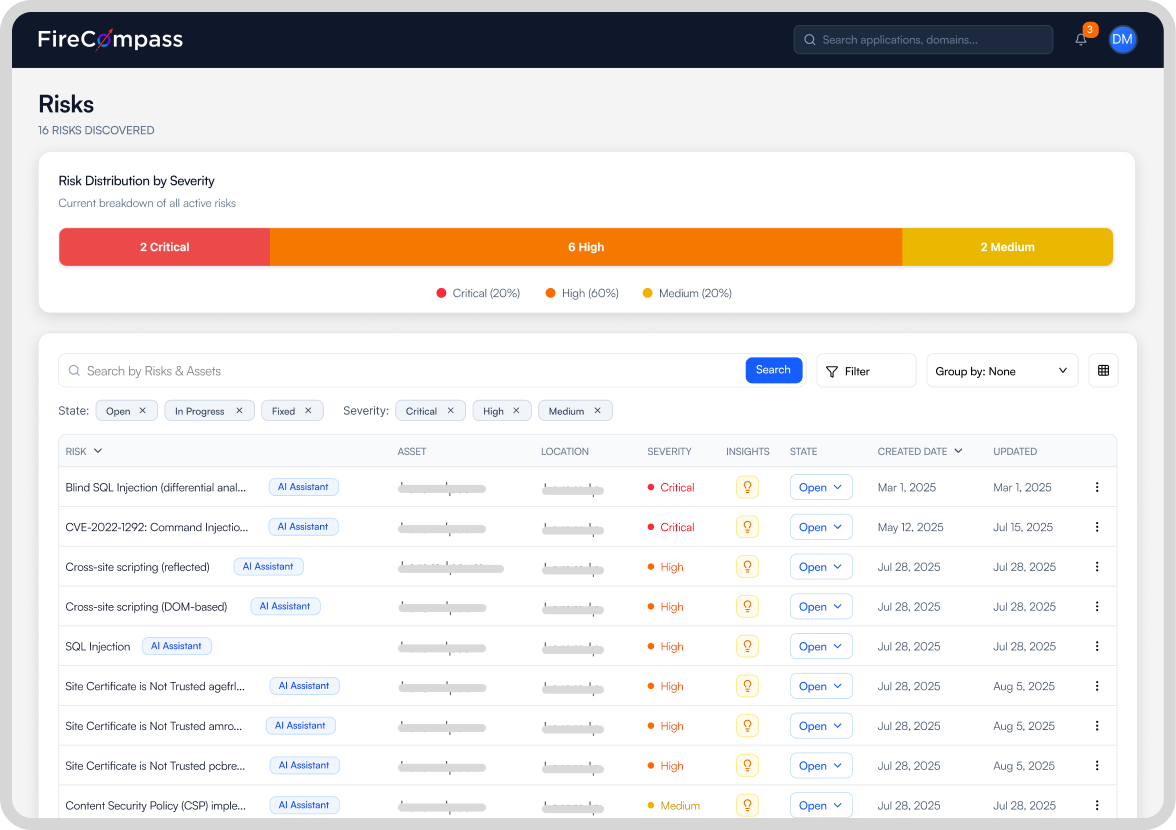
Agents test like an attacker and confirm what is real, so your team triages exploitable findings, not false alarms.
- OWASP Top 10: 2025 plus business logic abuse
- Authenticated and unauthenticated paths, including MFA flows
- Proof of exploit for every finding, with steps to reproduce
- No exploit, no alert. That gate holds false positives under 2%
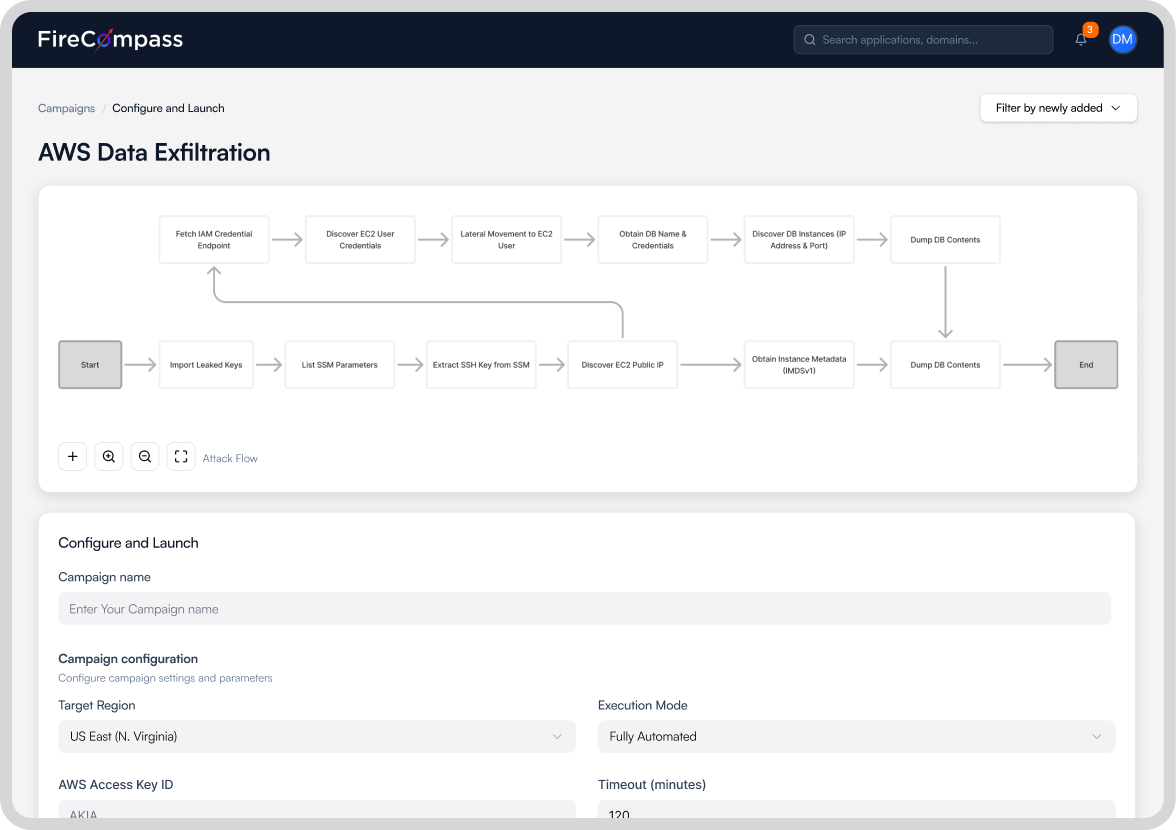
Chain findings into real attack paths
A single finding is rarely the breach. Agents connect findings the way real adversaries do in multi-stage red teaming, showing true blast radius.
- Credential reuse across services
- App-to-app and app-to-network lateral movement
- Privilege escalation path discovery
- Full MITRE ATT&CK kill-chain automation, no human steering
Run on your cadence, not a calendar
Testing keeps pace with how fast you ship, so the window between a change and its validation closes to near zero.
- Triggered by deployment, CVE, or a new asset
- Matches CI/CD release cadence
- Day-1 CVE validation for new disclosures
- One-click revalidation to confirm fixes
Run AEV against your own attack surface.
Exploit-validated findings, benchmarked in the open.
One finding became a full compromise
- Exposed .git. The agent reconstructed the repo and pulled database credentials from config files.
- Direct DB access blocked. The port was not externally exposed. A scanner stops here.
- Credential reuse to SSH root. The agent tested the same creds against SSH and gained root.
- Internal pivot to data exfiltration. From the server it found private keys, pivoted, and dumped the database.
- No human steering. No predefined playbook. Agents beat our top researchers 60 to 70% of the time in internal evals.
Fortune 500: annual program to continuous
Most validation tools simulate. AEV executes.
Breach and attack simulation tells you whether a control caught a technique. AEV executes the attack and proves the exposure.
| Capability | FireCompass AEV | BAS / control validation | Manual red teaming |
|---|---|---|---|
| Validates with a real exploit PoC | Live execution | Simulated technique only | Manual, slow |
| Business logic testing | AI-driven | Not supported | Manual only |
| Multi-stage attack chaining | Web to API to infra | Limited | Expert-dependent |
| Continuous, trigger-driven cadence | On every change | Yes | Annual |
| False positive rate | Under 2% | Not applicable, no exploitation | Low but variable |
| Cost per app / test | <$1,000 | Tooling plus tuning time | $2,400 to $10,000 |
Validation only works if it is safe to run in production.
A prominent global research and advisory firm says the governance layer is the part the market underestimates most. It is where we built first.
- Scope enforcement. Agents act only within defined boundaries. Nothing tests outside the authorized surface.
- Production-safe execution. Rate limits and control gates keep live systems stable while testing runs.
- Forensic audit trail. Every command, request, and response is timestamped for non-repudiation and review.
- Human-in-the-loop, optional. Run fully autonomous, or keep an expert validating before action.
- Kill switches. Stop any engagement instantly. Control over what agents can and cannot do is the design principle.
- Compliance-ready. The audit trail maps to PCI DSS 4.0, SOC 2 Type II, DORA, and ISO 27001 evidence needs.
Validated by the analysts who define the category.
Adversarial Exposure Validation, answered.
AEV is technology that delivers continuous, automated evidence of whether an attack is feasible in your environment. It runs real attack techniques against live assets and controls and proves which exposures an attacker could exploit, rather than scoring them by severity.
BAS simulates known techniques and measures whether a control detects them. AEV goes further and executes the attack, confirming exploitability with a working proof of concept. Gartner positions AEV as the successor to BAS, automated pen testing, and red teaming.
AEV replaces the calendar-based model. Instead of one annual test that covers about 20% of your surface, AEV validates exposure continuously and on triggers such as a deployment or a new CVE, with evidence behind every finding.
Every finding is executed safely against the live target and confirmed before it reaches your dashboard. That validation gate holds the false positive rate under 2%, against the 40 to 70% typical of scanners.
Yes, when the platform enforces governance. FireCompass applies scope allowlists, rate limiting, an instant kill switch, safe payload enforcement, credential scope guards, RBAC, and append-only audit logs with cryptographic timestamps.
AEV is the validation layer of a CTEM program. The audit trail maps to PCI DSS 4.0, SOC 2 Type II, DORA, and ISO 27001 evidence requirements, so you can prove what was tested and how.
Yes. FireCompass validates exposure across web apps, APIs, and infrastructure, and chains findings across them to show the real path an attacker would take.
Yes. FireCompass Explorer gives teams a free, evidence-backed pen test against a business-critical web app, with results in minutes and no agents to install.
For security professionals
The offensive security guide: BAS, CTEM, CART, pen testing, VA, AEV, and COST
Continuous Offensive Security Testing Is Becoming a Category. Here's What Most People Will Get Wrong
Agentic web application and API penetration testing
Prove what an attacker can actually reach
See validated exploits against a business-critical web app, not a list of maybes. Book a session with a FireCompass security expert.
Book a Demo →